Not All Nutrition ‘Experts’ Are Qualified—Here’s How to Tell
Nutrition Advice is Everywhere. It Doesn’t Mean it’s Good Advice.
Everywhere we look, it seems someone is trying to give us nutrition advice or sell us the next best nutritional supplement.
While most preaching nutrition advice are well-meaning, not all nutrition “experts” are in fact experts. In fact, in many US states, anyone can legally label themselves a “nutritionist” even if they have zero clinical experience & training. Up to 90% of nutrition advice online is considered low quality, and most available nutritional advice on social media is created by influencers, not actual experts.
When I was an NCAA Division I swimmer at a top-tier swimming university, a nutrition “expert” came to speak to us who happened to be a non-clinician (a biochemist) and author of a bestselling diet book. We were told to limit our carbs and our caloric intake so we could look lean in our swim suits. Needless to say, the advice was, on multiple levels, bad.
Fast forward 20+ years, and most athletes STILL are not getting proper access to reputable nutritional advice, in some cases even while competing at the highest levels of their sport. And while there is a growing population of experienced, clinically sound nutrition professionals giving reputable nutritional advice to athletes, they are often drowned out by the “What I Eat in a Day” influencers with zero clinical background. I often see well-meaning athletes get themselves into trouble following advice that isn’t just bad, but also downright dangerous, even if it seemed reputable to them at the time.
So how do I know if a nutrition “expert” truly has the right expertise?
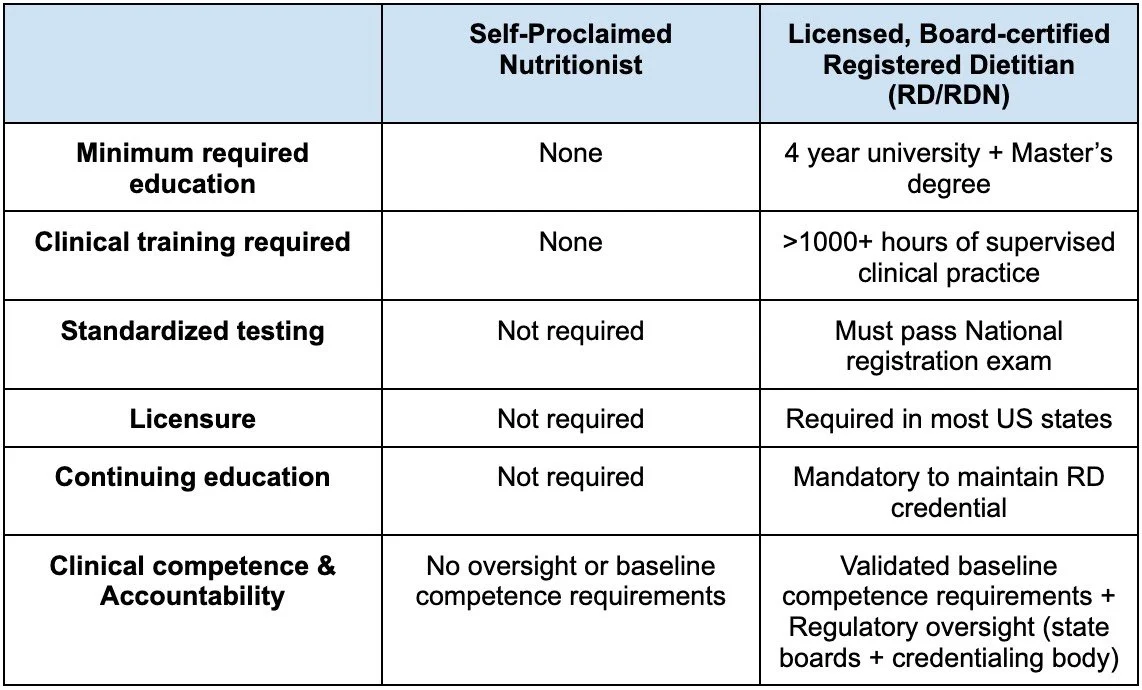
As a parent, a medical doctor, and a former athlete, I highly recommend athletes and families seek out nutrition support from someone with the RD/RDN (Registered Dietitian) credential. Typically, this is usually listed after their name (e.g. Megan Hellner, RD). Registered Dietitians are required to obtain advanced degrees and over a thousand hours of supervised clinical training. For athletes in particular, it’s prudent to seek out dietitians with extra training & experience in Sports Dietetics, Relative Energy Deficiency in Sport (REDs), and ideally, eating disorders (which are incredibly common in athletes and overlap clinically with REDs).
I’ve created a table to show how RDs distinguish themselves from other non-clinicians who might call themselves titles like nutritionist, nutrition coach, nutrition expert, health & wellness coach, holistic/functional nutritionist, etc. While there certainly are some reputable non-clinicians out there giving nutrition advice, the barrier to entry is low, and there is a much wider range of quality, so it’s easier to get led astray.
Which Athletes Might Benefit from seeing a Registered Dietitian?
I’m often surprised to see athletes giving their all to their training and spending money on all the “extras” (e.g. cold plunges, pricey supplements, etc), who aren’t paying attention to the basics of getting enough sleep, nutrition, and effectively managing their stress.
Now that I’m a physician caring for athletes, I wish I had had access to a Registered Dietitian when I was a young athlete and to know what I know now. Typically, athletes are considered a special population when it comes to nutrition, because they have unique and particularly high nutritional needs compared to the average human.
So many athletes could benefit from seeing an RD! For example:
Athletes who wish to improve their performance
Athletes who desire education on what their body needs and when
Athletes who struggle to get in enough food (in terms of quantity and/or variety)
Athletes with unexpected weight changes in either direction, or in growing teens, failure to achieve expected weight or height
Athletes who struggle with regulating their intake (binge/restrict cycles, for instance)
Athletes with signs/symptoms of REDs or an eating disorder
Athletes with concerns for micronutrient deficiencies (e.g. low iron, Vitamin D)
In summary…
For athletes (or non-athletes) looking to maximize their health, take their performance to the next level, and just feel better, experience and credentials do matter. I have seen over and over again how working with a Registered Dietitian (ideally with Sports experience) can be worth the investment of time and resources, even for the busiest of athletes
Reputable Nutrition Resources for Athletes:
Project REDs (all athletes)
Project RED-D (geared towards dancers)
Lane 9 Project (geared towards female athletes)